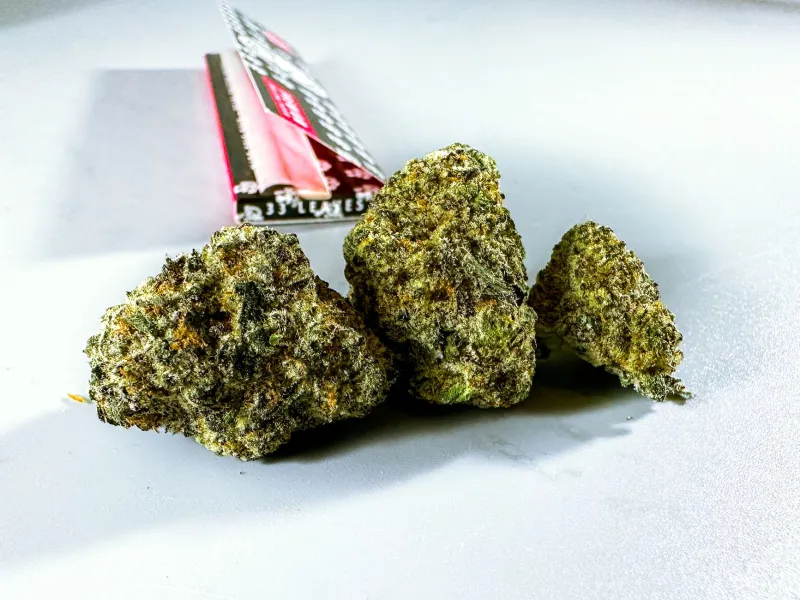
Two Tolerances, One Shelf: How Couples Build a Stash That Doesn't Start Fights

Photo: Jameslwoodward, CC BY-SA 3.0, via Wikimedia Commons
There is a specific kind of silence that fills a room when one partner opens the jar and finds crumbs where a beautiful, hand-trimmed eighth used to be. It's not a big fight. It's a small, recurring, deeply annoying fight. And it is almost always a logistics problem, not a love problem.
If you and your person consume at completely different levels — one of you is a two-puff-and-nap type, the other treats a Friday session like a tasting menu — you don't need separate lives. You need separate shelves, a labeling system, and a shared cart that actually reflects two humans instead of one average human.
Let's build it.
First, Name the Gap Out Loud
Most stash friction comes from pretending you have the same tolerance. You don't. One of you might be a 2.5mg edible person; the other might look at a 10mg gummy the way a labrador looks at a tennis ball. Neither is wrong, and neither is a personality flaw. But if you're both pulling from the same unlabeled jar, the higher-tolerance partner will blow through the supply and the lower-tolerance partner will spend Saturday night accidentally orbiting Jupiter because they grabbed the wrong pre-roll.
So before you order anything, have the boring conversation: how much do we each use in a typical week, and what formats actually work for each of us?
The Split Order: A Template That Actually Works
Think of a shared delivery order like a grocery run for two people with different diets. You don't buy one giant bag of everything; you buy overlapping staples plus a few personal items.
A reasonable structure for a two-week cycle:
- One shared 'house' product — something mid-potency both of you genuinely like. Flower around 15–18% THC, or a balanced 1:1 vape, or a 5mg edible. This is the default, the Tuesday-night item, the thing you both restock without discussion.
- One personal item each — their high-THC indica for late nights, your low-dose mints for daytime. No sharing rule on these. Zero.
- One experiment — a new strain, a new brand, a new format. Split the cost, try it together, decide whether it graduates to house status or gets quietly retired.
- One functional item — CBD flower, a high-CBD tincture, or a ratio product that either of you can reach for when you've overdone it or just want to take the edge off without the ride.
That's four line items, one delivery fee, two happy people. Roughly a 50/30/20 split of budget between shared, personal, and experimental works for most couples we hear from.
Label Like Your Relationship Depends On It
It kind of does. Grab a Sharpie and a pack of colored dot stickers. Seriously.
Red dot: high THC, proceed with intention. Green dot: low THC or balanced, anytime product. Blue dot: CBD or functional, no high expected. No dot: shared house product, fair game.
Then set up physical zones. A shared shelf, and one bin each. If it's in someone's bin, it's theirs. This sounds controlling until you've lived it for a month, at which point it feels like the single greatest act of household diplomacy you've ever pulled off.
Add the date to every label. Nothing kills a good stash faster than three mystery jars from an optimistic spring shopping spree.
Pick Formats That Are Hard to Overconsume
If the lower-tolerance partner keeps accidentally overshooting, the format is doing them dirty. Look for:
- Microdose edibles — 2.5mg or even 1mg pieces, so a dose is a decision rather than a guess.
- Low-THC pre-rolls or 'session' joints — under 15%, easy to pace.
- Ratio vapes — 1:1 or 2:1 THC to CBD, which tend to be friendlier for casual consumers.
- CBD flower to blend — cut a strong strain with high-CBD hemp and suddenly one jar serves both tolerances.
- Dosed beverage or mints — precise, shareable, and impossible to accidentally finish someone's favorite jar of flower.
Meanwhile, the higher-tolerance partner gets their own full-strength lane without feeling like they're rationing.
The 'You Finished My Favorite Strain' Truce
Three house rules that end the classic fight:
- The reserve shelf. Each partner gets one product per order that is untouchable. Not hidden, not secret — just named. 'This is my reserve.' It's a boundary, not a betrayal.
- The reorder rule. Whoever finishes a reserve item buys the replacement. Simple, fair, and self-correcting.
- The shared notes app. One list, both phones: strain name, brand, potency, whether you'd buy it again. It takes ninety days to turn this into a genuinely useful household database, and it ends the 'wait, what was that one called' loop forever.
Bonus rule: keep a cheap backup pre-roll somewhere in the house. Emergencies happen. Arguments don't need to.
Reorder Habits That Keep the Peace
Once you've found a rhythm, make it automatic. Buy two of the house product instead of one. Set a shared reorder reminder every two weeks instead of waiting for someone to discover an empty jar at 9pm. Rotate the experiment slot monthly so neither of you gets bored. And every so often, shop the cart together instead of one person quietly doing all the deciding — it's weirdly fun, and it prevents the slow resentment of one partner effectively being the household cannabis sommelier.
Sometimes Separate Carts Are the Answer
And that's fine. Plenty of couples order separately, from the same retailer, on the same delivery. Same doorstep, different bags. Nobody's keeping score, nobody's hiding anything, and nobody's favorite strain disappears on a Wednesday afternoon. Independence is not a relationship problem. It's inventory management.