Lot Numbers Don't Lie: A Practical Pre-Smoke Checklist for Delivery Cannabis
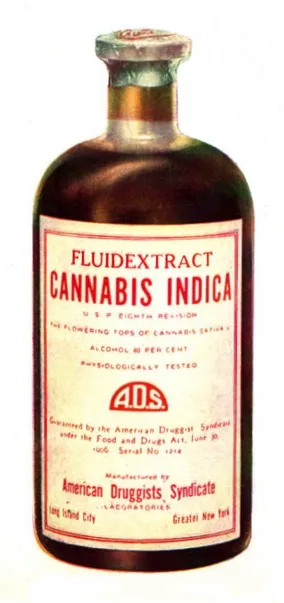
Photo: Unknown, Public domain, via Wikimedia Commons
You probably glance at the health score in the window before you order the nachos. You check the expiration date on the milk. You may even have opinions about which gas station has the cleanest bathroom. Then a delivery driver hands you a bag of cannabis and you… tear it open and light up. No judgment. We've all done it. But in 2026, the information is right there on the package, and looking at it takes about ninety seconds.
This isn't a scare piece. Legal, tested cannabis in a regulated state is overwhelmingly safe. It is, however, a product of agriculture — and agriculture has good batches and weird batches. The goal here is simple: know what you're actually holding, and know what to do if something's off.
Start With the Numbers, Not the Logo
Every compliant cannabis package carries a lot or batch code, usually on the side panel, under the lid, or printed next to the harvest date. Increasingly there's a QR code that dumps you straight into a lab report.
Here's the mental shift worth making: a brand name is an average. A batch number is a fact. One brand can have a gorgeous Blue Dream in March and a tired, over-dried version in August, depending on which harvest got packed. When you shop by brand alone, you're trusting an average. When you shop by batch, you're looking at the actual plant that ended up in your grinder.
Save the code. Screenshot it. If you fall in love, that's your reorder keyword. If something goes sideways, that's your reference number.
Reading a COA Without a Chemistry Degree
A Certificate of Analysis is the lab paperwork behind the batch. You don't need to read every line, but you should know what a complete one looks like:
- Lab name and license number. A real, licensed lab, identifiable and searchable.
- Sample date and harvest date. These should be recent and reasonably close to each other.
- Cannabinoid panel. Look at total THC and total THCa, not just the headline number.
- Terpene panel. This is the flavor and effect fingerprint, and its presence is a decent proxy for whether the producer cares.
- Contaminant screens. Microbials, mycotoxins, pesticides, heavy metals, and — for extracts — residual solvents.
- Moisture or water activity. Dry, crunchy flower with a low moisture reading tells you a lot before you even open the jar.
If a product page or package QR only shows cannabinoids and skips the safety panels, that's not necessarily a red flag, but it's a data point. Full transparency is becoming the norm, and the better operators are leaning into it.
Bookmark the Recall Boards
Recalls happen, and they're almost always lot-specific, not brand-wide. A single batch of gummies gets flagged for a labeling error, or one harvest lot fails a microbial screen. The sky is not falling, but the batch is out.
Where to look: your state cannabis regulator's recall or enforcement page (California's DCC, Colorado's MED, Washington's LCB, Michigan's CRA, and so on), plus your delivery service's own notice page or email list. Search the lot number. It takes thirty seconds. If the batch you're holding shows up, don't consume it — contact support with the code and let them handle it. Most reputable retailers will replace or refund without a fight, because a recall is their problem to solve, not yours.
The Tell-Tale Signs of a Stale Batch
Lab tests don't catch everything, and freshness is the thing they measure least well. Flower tells you itself if you know what to look for:
- The hay smell. If it smells like a lawnmower rather than fruit, fuel, or citrus, the cure went sideways.
- Crunch. Squeeze a bud. It should have some give. If it turns to dust between your fingers, it's been over-dried.
- Brittle trim and brown edges. Some color variation is normal; uniformly brown and crispy is not.
- Packaging dates far in the past. Ask for the harvest or packaging date before you order. Good retailers list it. Great ones make it a filter.
- Seeds in something sold as sinsemilla. Annoying, and a sign of loose quality control.
None of these will hurt you. They'll just make you feel like you overpaid for a museum exhibit of what cannabis used to be.
The 60-Second Doorstep Check
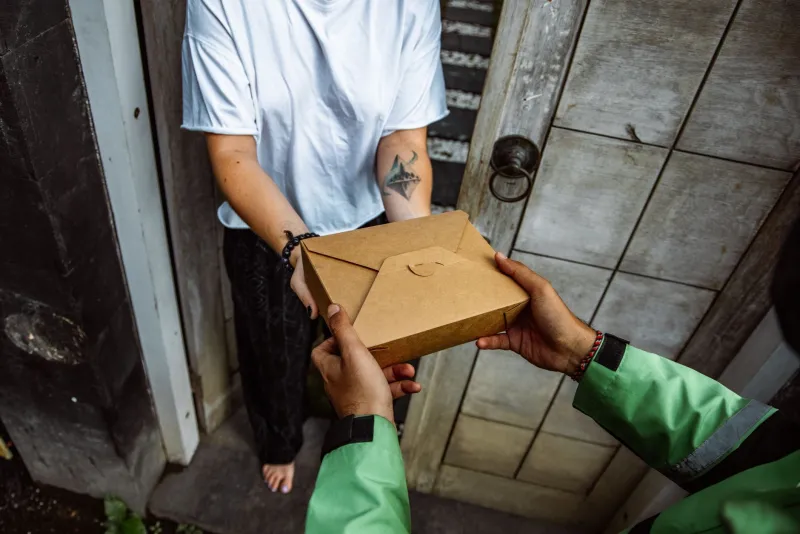
Before the driver leaves, or right after the bag hits your counter:
- Seal integrity. Child-resistant packaging should be intact and tamper-evident.
- Label matches order. Strain, weight, potency, and lot code on the package should match your receipt.
- Weight. An eighth is 3.5 grams. A scale is a twenty-dollar investment that pays for itself once.
- Concentrates and edibles. Check for leakage, melted caps, or separated oils — a hot delivery van can ruin a vape cartridge.
If Something Is Actually Wrong
Don't consume it. Photograph the package, the lot code, and the problem. Send all of it to customer support in one message. Ask for the COA if you don't have it. And if you ever suspect a genuine safety issue — illness, mold, contamination — report it to your state regulator as well as the retailer. That's not being a difficult customer. That's how the system gets better for everyone.
This Is Just Normal Now
Checking a batch code is the cannabis equivalent of reading a health score, checking a VIN before buying a used car, or glancing at the date on a carton of eggs. It's not paranoia. It's basic consumer literacy, and it's quietly becoming the difference between people who get consistently great weed and people who keep rolling the dice.
The brand got you in the door. The batch is what you're actually inhaling.