Nobody's Business But Yours: The Real Reason Discreet Delivery Is Changing Who Buys Cannabis
There's a moment that every first-time dispensary visitor knows well. You push open the door, step inside, and suddenly you're acutely aware of every person who might be watching — your neighbor's car in the parking lot, a coworker driving by, your kid's soccer coach walking past the strip mall. For a lot of people, that moment is enough to turn them right back around.
Home delivery doesn't have that moment. And that changes everything.
The Dispensary Walk of Shame Nobody Talks About
Legal cannabis has made enormous strides in the past decade. More than half of U.S. states have some form of legal adult-use or medical program, and public opinion polls consistently show majority support for legalization. But social stigma? That's a slower beast to kill.
For plenty of consumers — suburban parents, professionals in conservative industries, seniors, people living in tight-knit communities — the act of being seen buying cannabis still carries real social weight. It doesn't matter that it's legal. It doesn't matter that their neighbor probably buys it too. The visibility of the transaction is the problem.
This is the privacy paradox at the heart of the cannabis delivery boom: in a world where cannabis is increasingly normalized, a huge segment of buyers still want their purchases to stay quietly, completely private. Not because they're ashamed, necessarily — but because they'd simply rather not have that conversation with their HOA president.
What "Discreet" Actually Means in Practice
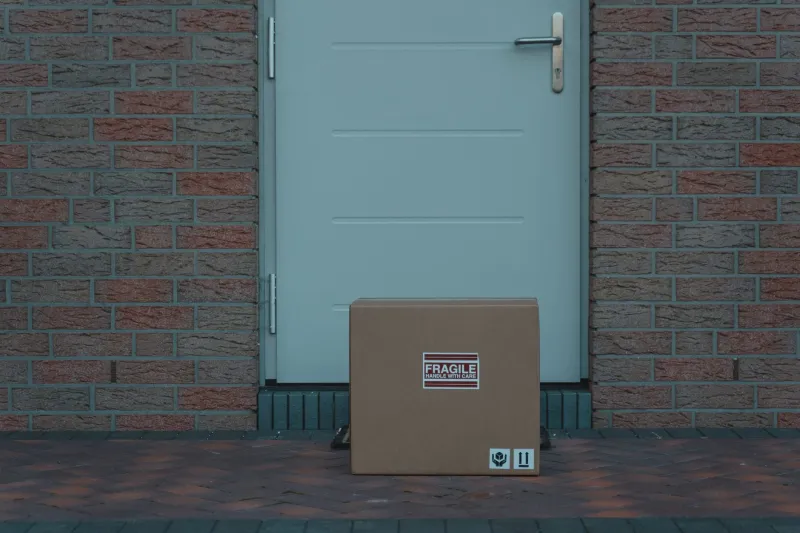
When online cannabis retailers talk about discreet packaging, they're not being coy. The standard in the industry has evolved into something genuinely thoughtful. Orders typically arrive in plain cardboard boxes or padded mailers with no cannabis leaf graphics, no dispensary branding, nothing that signals to the UPS driver, your front porch camera, or your curious roommate what's inside.
Billing descriptors on credit card statements are similarly sanitized — you'll see a generic business name rather than anything that screams "weed store." The return address, if visible at all, is typically a neutral fulfillment address.
Some platforms have taken it further. Temperature-controlled packaging for edibles and tinctures. Tamper-evident seals. Odor-resistant inner liners. The infrastructure of discretion has become a legitimate competitive differentiator — because customers are paying attention to it.
Who's Actually Driving the Demand for Privacy?
It would be easy to assume that privacy-focused buyers are mostly people in stigma-heavy environments — rural areas, religious communities, places where cannabis culture hasn't fully landed yet. And sure, that's part of it. But the demographics are more interesting than that.
Medical patients are a huge piece of the puzzle. Someone managing chronic pain, anxiety, or a sleep disorder with cannabis doesn't necessarily want their condition — or their chosen treatment — to be community knowledge. The dispensary experience, as welcoming as many of them are, still requires you to show up, be present, and potentially run into people you know.
Professionals in drug-tested industries occupy a complicated middle ground. Teachers, healthcare workers, federal contractors, and others who work in environments with strict substance policies may be using cannabis entirely legally on their own time — but prefer to keep that information out of casual circulation. Delivery lets them do that.
Then there are older consumers, one of the fastest-growing cannabis demographics in the country. Many seniors grew up during the height of anti-drug messaging and carry complicated feelings about being seen buying cannabis, even when they've personally made peace with using it for arthritis, insomnia, or anxiety. The ability to order quietly, at home, without performance or explanation, is genuinely liberating for this group.
The Psychological Comfort of the Closed Door
There's something worth sitting with here beyond just logistics. Privacy isn't only about avoiding judgment — it's about psychological safety. When you shop from your couch, you're in control of your environment. You're not navigating a retail space, making eye contact with strangers, or feeling pressure to make quick decisions under fluorescent lighting.
For people who experience social anxiety, this matters enormously. For people with mobility challenges, it's a non-negotiable. For anyone who's ever felt out of place in a dispensary — too old, too square, too new to cannabis culture — the screen-and-doorstep model removes a friction point that was quietly keeping them away.
One thing that comes up repeatedly when cannabis delivery customers talk about why they prefer it: they feel like they can take their time. They can research products, read reviews, compare options, and make an informed decision without feeling like they're holding up the line. Privacy and autonomy tend to travel together.
The Delivery Experience as Brand Statement
For online cannabis retailers, the packaging isn't just a box. It's the first physical touchpoint with the customer — and in a privacy-conscious market, it's a trust signal.
Getting this wrong has real consequences. A package that arrives with obvious cannabis branding is a broken promise. One that shows up damaged, leaking, or smelling like the contents is a liability. The best delivery experiences feel almost anticlimactic in the best possible way: a plain box, intact, on time, containing exactly what was ordered. No drama. No exposure. No story.
That's the goal. And increasingly, the retailers who understand that are the ones building real customer loyalty.
The Bigger Picture
Discreet delivery is, in a sense, a form of respect. It acknowledges that a customer's relationship with cannabis — their reasons for using it, their comfort level with visibility, their personal circumstances — belongs entirely to them. An online marketplace that gets this isn't just selling products. It's selling the freedom to make a private choice without it becoming anyone else's business.
As more states come online and the market matures, expect the conversation around delivery discretion to get more sophisticated, not less. Customers are savvier, expectations are higher, and the companies that treat privacy as a feature rather than an afterthought are going to stand out.
Your front door is yours. What arrives at it should be, too.